
Beurer Scale Manual: A Comprehensive Guide
Welcome! This manual provides detailed instructions for various Beurer scales, including models like BF 220 Comfort, BF 195, and BF 180 BG 13 Classic.
Explore features such as weight, body fat, muscle mass, and bone density analysis, alongside user memory and activity level settings for personalized tracking.
Beurer is a leading German brand renowned for its high-quality health and wellness products, and their scales are a cornerstone of this reputation. These scales aren’t simply devices for measuring weight; they offer a comprehensive insight into your body composition, empowering you to take control of your health journey.
From basic weight scales to advanced diagnostic models like the BF 220 Comfort and BF 195, Beurer offers a diverse range to suit individual needs and preferences. These scales utilize bioelectrical impedance analysis (BIA) to estimate body fat percentage, body water levels, muscle mass, and even bone mass, providing a holistic view of your physical condition.
The diagnostic scales feature user memory functions, allowing multiple individuals to track their progress independently. Adjustable activity level settings further refine the accuracy of calculations, ensuring personalized results. With sleek designs, intuitive interfaces, and a commitment to precision, Beurer scales are a valuable tool for anyone seeking to monitor and improve their overall well-being.
Understanding Different Beurer Scale Models
Beurer offers a spectrum of scales, each designed with specific features and capabilities. The BF 220 Comfort stands out with its attractive, round design and blue illuminated display, providing weight, body fat, water, muscle, and bone mass measurements, alongside AMR calorie display and BMI calculation.
Stepping up, the BF 195 Diagnostic Scale boasts an extra-large display with blue illumination and an 8mm-thick glass standing surface. It mirrors the BF 220’s comprehensive body analysis features, offering detailed insights into body composition.
For a classic approach, the BF 180 BG 13 Classic provides a large, blue-illuminated display for essential diagnostic measurements. All models share commonalities like brushed stainless steel electrodes, five activity levels, 10 user memory spaces, and adjustable unit settings (kg, lb, st). Weight capacity across these models is 180kg, with a graduation of 100g/0.1% for precise readings. Choosing the right model depends on your desired level of detail and aesthetic preference.
Key Features Common to Beurer Scales
Beurer scales, regardless of the specific model, share several core functionalities designed for comprehensive body analysis and user convenience. A prominent feature is the use of brushed stainless steel electrodes, ensuring accurate bioelectrical impedance analysis for body composition measurements.
All scales offer five activity level settings, allowing users to personalize readings based on their lifestyle. They also incorporate a 10-user memory, enabling multiple individuals to track their progress independently. Units of measurement are easily adjustable between kilograms (kg), pounds (lb), and stones (st).
Furthermore, Beurer scales feature quick start technology for immediate use and automatic shut-off to conserve battery life. An overload indicator alerts users if the weight capacity of 180kg is exceeded. Precision is maintained with a graduation of 100g/0.1%. These consistent features across models ensure a reliable and user-friendly experience.
Setting Up Your Beurer Scale
Initial setup of your Beurer scale is straightforward. Begin by carefully removing the scale from its packaging and placing it on a hard, level surface – carpet can affect accuracy. Before first use, or after battery replacement, allow the scale a moment to initialize.
Insert the provided 3-V CR2032 batteries, ensuring correct polarity. The scale will briefly display symbols, indicating it’s ready for use. Select your preferred unit of measurement (kg, lb, or st) using the unit button, typically located on the side or back of the device.
For scales with user memory, you may be prompted to enter your personal profile details, such as age, height, and activity level. This information refines the accuracy of body composition analysis. Refer to the specific model’s instructions for detailed guidance on profile creation and management.

Installing Batteries
Battery installation is crucial for your Beurer scale’s operation. Most models require 2 x 3-V CR2032 batteries, though always verify the specific requirements for your model. Locate the battery compartment, usually on the rear of the scale, and gently open the cover.
Insert the batteries, strictly adhering to the polarity markings (+ and -) indicated inside the compartment. Incorrect battery insertion can damage the scale and void the warranty. Ensure the batteries are securely seated before closing the compartment cover.
Upon battery installation, the scale will typically perform a self-test, displaying various symbols briefly. If the display remains blank, double-check the battery polarity and ensure the batteries are fresh. Replace batteries when the low battery indicator appears on the display to maintain accurate readings.
Choosing Units of Measurement (kg, lb, st)
Beurer scales offer flexibility in displaying weight measurements, allowing you to choose between kilograms (kg), pounds (lb), and stones (st). This customization caters to individual preferences and regional standards.
To switch between units, locate the unit button on your scale – its position varies depending on the model, but it’s often found on the underside or side. Press the unit button repeatedly until your desired unit of measurement appears on the display.
The scale will remember your selected unit even after being turned off. Ensure the correct unit is selected before taking a measurement for accurate tracking. Some models feature a ‘hold’ function to lock the displayed unit. Refer to your specific model’s instructions for detailed guidance on unit selection.
Taking Accurate Measurements
Achieving accurate weight readings with your Beurer scale requires careful attention to placement and body positioning. Ensure the scale is placed on a hard, level surface – carpets or uneven floors can cause inaccuracies.
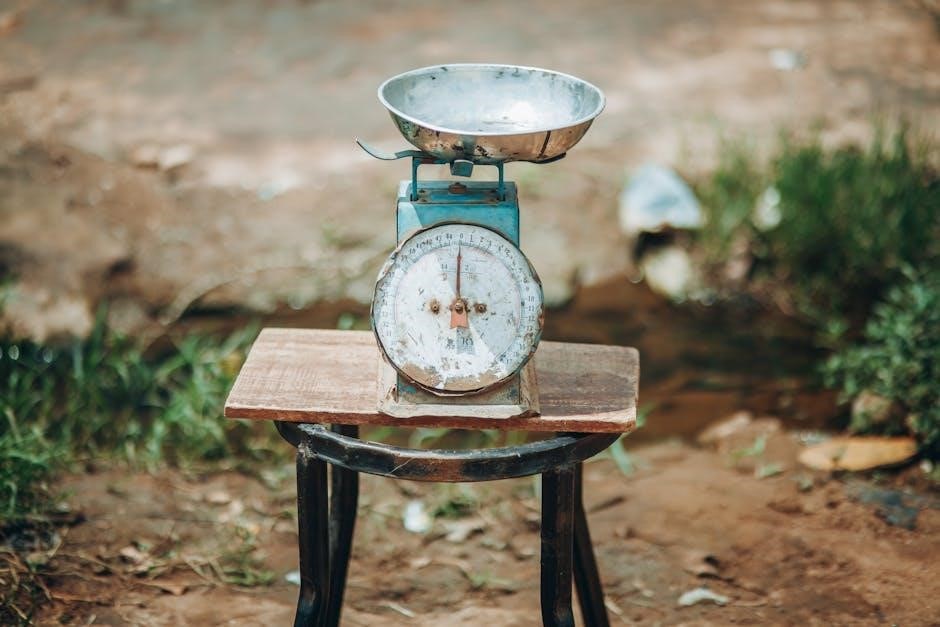
Before stepping on, ensure the scale displays zero (0.0). If not, gently tap the center to calibrate it. Step onto the scale with your feet evenly spaced and weight distributed naturally. Avoid leaning against objects or shifting your weight during measurement.
Stand still until the display stabilizes and shows a consistent reading. The scale typically features a quick-start technology, displaying results almost instantly. Avoid taking measurements immediately after exercise, consuming large meals, or significant fluid intake, as these factors can influence weight.
Proper Placement of the Scale
Optimal placement is crucial for accurate readings from your Beurer scale. Always position the scale on a firm, level, and hard surface. Avoid placing it on carpets, rugs, or uneven flooring, as these can cause instability and inaccurate measurements. A tile or hardwood floor is ideal.
Ensure there is sufficient space around the scale – at least 30 x 30 cm (as indicated by the standing surface dimensions of some models) – to allow for comfortable and balanced standing. Keep the scale away from walls or furniture that could obstruct proper weight distribution.
Avoid areas with extreme temperatures or humidity, as these conditions can affect the scale’s performance. The scale’s standing surface is typically made of safety glass, so protect it from impacts and sharp objects. Consistent placement will improve the reliability of your measurements.
Correct Body Positioning
Achieving accurate weight measurements with your Beurer scale requires proper body positioning. Stand upright and still on the center of the scale platform, distributing your weight evenly across both feet. Avoid leaning against anything for support, as this can alter the reading.
Ensure your feet are flat on the surface and not overlapping or extending beyond the edges of the scale. Remove shoes and socks for consistent results, as these can add weight and affect balance. Maintain a natural posture with your arms relaxed at your sides.
Avoid excessive movement or shifting your weight while the scale is taking a measurement. Wait for the display to stabilize before noting the reading. For body fat analysis, follow the specific instructions in the manual regarding electrode contact and body grip.
Understanding the Display Symbols
Your Beurer scale’s display utilizes symbols to convey important information beyond just weight. A low battery symbol indicates the need for replacement, typically using 3-V CR2032 batteries. An overload indicator appears if the weight exceeds the scale’s 180 kg capacity.
Models like the BF 220 Comfort and BF 195 Diagnostic scales feature symbols for body fat percentage (displayed to 0.1%), body water percentage, muscle mass, and bone mass. These are often accompanied by icons representing each measurement.
The display also shows activity level settings (ranging from 1 to 5) and user memory indicators, identifying which user profile is currently selected. A quick start symbol signifies the scale is ready for immediate use, while a hold function may be indicated by a specific icon.
Interpreting Your Results: Weight
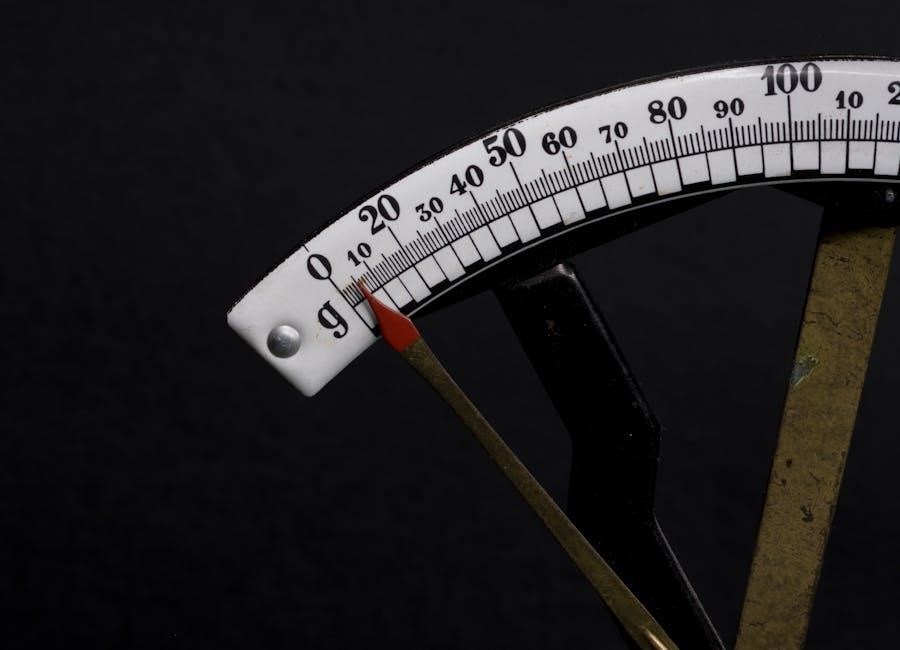
Weight is the fundamental measurement provided by all Beurer scales. Readings are displayed in kilograms (kg), pounds (lb), or stones (st), selectable via the unit settings. The scales offer a graduation of 100g (0.1 kg) for precise tracking. Consistent monitoring allows you to observe trends and assess progress.
Remember that weight can fluctuate due to various factors like hydration levels, recent meals, and time of day. For the most accurate readings, weigh yourself at the same time each day, under similar conditions.
Diagnostic scales, such as the BF 195, integrate weight data with other body composition analyses. This provides a more holistic view of your health, but weight remains a crucial baseline metric. The large, blue-illuminated display ensures clear visibility of your weight measurement.
Body Fat Percentage Analysis
Beurer diagnostic scales, like the BF 220 Comfort and BF 195, utilize bioelectrical impedance analysis (BIA) to estimate your body fat percentage. This measurement indicates the proportion of your weight that is fat mass, as opposed to lean mass (muscle, bone, and water).
Electrodes, crafted from brushed stainless steel, send a harmless electrical signal through your body. The resistance to this signal is used to calculate body fat. Accurate readings require consistent hydration and adherence to activity level settings.
The scales display body fat percentage with a precision of 0.1%. Understanding your body fat percentage, alongside weight, provides a more comprehensive assessment of your body composition and overall health. Remember to input your correct activity level for personalized results.
Body Water Measurement
Beurer diagnostic scales, including the BF 195 and BF 220 Comfort, determine your total body water content using the same bioelectrical impedance analysis (BIA) technology employed for body fat assessment. This measurement reveals the percentage of your body weight comprised of water.
Adequate hydration is crucial for numerous bodily functions, and monitoring your body water percentage can offer insights into your hydration status. Like body fat analysis, BIA sends a safe electrical signal through the body, measuring resistance.
The scale displays body water percentage with 0.1% precision. Factors like recent fluid intake, exercise, and diet can influence readings. Consistent measurement conditions and accurate activity level settings are vital for reliable results. Maintaining optimal hydration supports overall health and well-being;
Muscle Mass and Bone Mass Calculations
Beurer diagnostic scales, such as the BF 220 Comfort and BF 195, utilize Bioelectrical Impedance Analysis (BIA) to estimate both muscle mass and bone mass. These calculations are derived from the same electrical signal used for body fat and water measurements, assessing resistance within the body.
Muscle mass represents the weight of your muscles, contributing to strength and metabolism. Bone mass indicates the density of your skeletal structure, vital for long-term health. These values, displayed with 0.1% precision, provide a more comprehensive body composition analysis.
Remember, BIA provides estimates, and accuracy can be affected by hydration levels and activity settings. Consistent measurement conditions and selecting the correct activity level are crucial. These metrics, alongside weight, body fat, and water, offer a holistic view of your physical condition.
Using User Memory Functions
Beurer scales, including the BF 220 Comfort and BF 195, feature user memory to track individual progress. These scales can store data for up to 10 users, allowing each person to monitor their body composition independently.
To add a user, consult your scale’s specific instructions – typically involving pressing a user button and entering a number. Once a user is selected, the scale automatically stores measurements to their profile. To delete a user, follow the manual’s guidance, usually a button combination.
This feature is invaluable for families or individuals wanting personalized tracking. Consistent user selection ensures accurate data recording. Remember to set the appropriate activity level for each user to refine the scale’s calculations and provide more relevant insights into their health metrics.
Adding and Deleting Users
Beurer diagnostic scales, like the BF 195 and BF 220 Comfort, accommodate up to ten individual users, enabling personalized health tracking within a household. Adding a user typically involves pressing the “User” button on the scale, followed by selecting a number (1-10) to assign to that individual.
The scale will then store all subsequent measurements under that user’s profile. To delete a user, the process varies slightly depending on the model, but generally involves holding the “User” button for a few seconds, then selecting the user number and confirming deletion.
Always refer to your specific scale’s manual for precise instructions. Properly managing user profiles ensures accurate data collection and prevents confusion when monitoring individual progress over time. Consistent user selection is key for reliable results.
Activity Level Settings
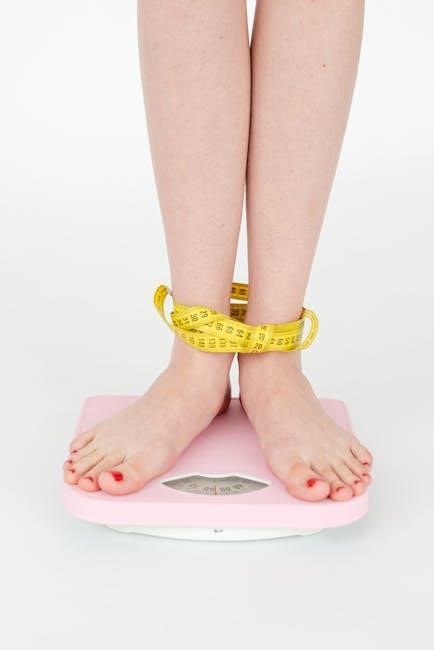
Beurer scales, particularly diagnostic models like the BF 220 Comfort and BF 195, incorporate activity level settings to refine body fat analysis. These scales offer five distinct activity levels, ranging from sedentary (level 1) to very active (level 5).
Selecting the appropriate activity level is crucial for accurate body fat percentage calculations, as it factors in your daily energy expenditure. To set your activity level, navigate through the scale’s menu using the buttons, typically accessed after entering user information.
A more active lifestyle requires a higher setting. Incorrectly setting this parameter can lead to inaccurate readings. Regularly review and adjust your activity level as your routine changes to maintain the precision of your body composition analysis.
Troubleshooting Common Issues
Encountering problems with your Beurer scale? Several common issues have straightforward solutions. If the scale isn’t turning on, first ensure fresh batteries are correctly installed. For inconsistent readings, verify the scale is on a hard, level surface and that you’re following proper body positioning guidelines.
An “overload” indicator signifies the weight exceeds the 180 kg capacity. Remove weight until within the limit. If issues persist, try restarting the scale by removing and reinserting the batteries; Ensure no other electronic devices interfere with the scale’s operation.
If problems continue, consult the full manual or Beurer’s support website for more detailed troubleshooting steps. Remember the 5-year warranty offers protection against manufacturing defects.
Scale Not Turning On
If your Beurer scale fails to power on, the most common cause is depleted batteries. Begin by replacing both 3-V CR2032 batteries with fresh ones, ensuring correct polarity. Double-check that the battery compartment is securely closed. Sometimes, a simple reset can resolve the issue; remove the batteries for a minute, then reinsert them.
Verify the scale is placed on a hard, flat surface, as soft flooring can sometimes interfere with operation. A quick start technology is featured, but ensure sufficient pressure is applied when stepping onto the scale. If the problem persists after these steps, inspect the battery contacts for any corrosion or debris.
Consult the full manual for diagrams and further assistance. Remember the scale has a 5-year warranty.
Inconsistent Readings
Experiencing fluctuating weight readings on your Beurer scale? Several factors can contribute to this. Ensure the scale is positioned on a perfectly level and hard surface – carpets or uneven floors will cause inaccuracies. Consistent body positioning is crucial; stand still with your weight evenly distributed.
Avoid measuring immediately after exercise, consuming liquids, or wearing heavy clothing. These can all impact results. If readings continue to vary significantly, try recalibrating the scale according to the instructions in the manual. Check the scale’s weight capacity (180 kg) isn’t exceeded, triggering an overload indicator.
Remember that slight variations are normal, but persistent inconsistencies warrant further investigation. Battery levels can also affect accuracy, so ensure they are fresh.
Overload Indicator
What does the overload indicator mean on your Beurer scale? This signal, typically displayed as “O” or a similar symbol, indicates that the weight placed on the scale exceeds its maximum capacity of 180 kg. Immediately step off the scale to prevent potential damage to the internal sensors.
Do not attempt to continue using the scale while the overload indicator is active. Repeatedly exceeding the weight limit can compromise the scale’s accuracy and lifespan. Ensure the weight of all individuals using the scale remains within the specified range.
Before attempting another measurement, verify that no objects are adding to the weight on the platform. If the indicator persists even without exceeding 180 kg, contact Beurer customer support for assistance, as it may indicate a malfunction.
Maintaining Your Beurer Scale
Proper care ensures the longevity and accuracy of your Beurer scale. Regularly clean the standing surface with a slightly damp cloth; avoid abrasive cleaners or fully immersing the scale in water. The safety glass surface is durable but susceptible to scratches from harsh chemicals.
When replacing batteries (2 x 3-V CR2032), ensure correct polarity. Dispose of used batteries responsibly, following local regulations. Avoid exposing the scale to extreme temperatures or direct sunlight, as this can affect its performance.
Store the scale in a dry, stable location when not in use. Periodic checks of the battery compartment for corrosion are recommended. With consistent care, your Beurer scale will provide reliable measurements for years to come, supporting your health and wellness journey.

Cleaning and Care
Maintaining cleanliness is crucial for accurate readings and a prolonged lifespan. Regularly wipe the standing surface of your Beurer scale with a soft, slightly damp cloth. Avoid using harsh chemicals, abrasive cleaners, or solvents, as these can damage the safety glass and electronic components.
Never immerse the scale in water or any other liquid. Ensure the scale is completely dry before use. For stubborn stains, a mild soap solution can be used, followed by a thorough wipe with a clean, damp cloth. Pay attention to the electrodes, ensuring they remain free from dirt and residue.
Gentle cleaning practices will preserve the scale’s functionality and appearance, contributing to consistent and reliable body composition analysis over time. Proper care is a simple investment in your health monitoring.
Battery Replacement
Your Beurer scale utilizes 2 x 3-V CR2032 batteries for operation. When the display indicates low battery power, it’s time for a replacement. Locate the battery compartment, typically on the back of the scale. Gently open the compartment cover, often using a small screwdriver or your fingers.
Remove the old batteries, noting the correct polarity (+ and -). Insert the new batteries, ensuring they are aligned correctly. Close the battery compartment securely. The scale should now power on. Dispose of used batteries responsibly, following local regulations for battery recycling.

Using high-quality batteries is recommended for optimal performance. Incorrect battery installation can lead to inaccurate readings or scale malfunction. Always replace both batteries simultaneously for consistent results.
Beurer BF 220 Comfort: Detailed Overview
The Beurer BF 220 Comfort is a diagnostic bathroom scale boasting an attractive, round design with a blue illuminated display. It features a modern frame and provides comprehensive body analysis, including weight, body fat, body water, muscle percentage, and bone mass. An AMR (Automatic Metabolic Rate) calorie display and BMI calculation are also included.
This model utilizes brushed stainless steel electrodes and offers five activity levels for personalized settings; It can store data for up to 10 users and allows switching between kg, lb, and st units. Quick start technology ensures immediate use, while automatic shut-off conserves battery life.
The scale has a weight capacity of 180 kg with a graduation of 100g, and accuracy to 0.1% for body fat. Dimensions are 31 x 31 x 2.3 cm, with a display size of 66 x 66 mm. It includes a 5-year warranty.
Beurer BF 195 Diagnostic Scale: Detailed Overview

The Beurer BF 195 Diagnostic Scale stands out with its extra-large, 8mm-thick glass standing surface in an XL format. It features an extra-large display with blue illumination, providing clear visibility of key metrics. Like the BF 220, this scale measures weight, body fat, body water, muscle percentage, and bone mass.
Brushed stainless steel electrodes ensure accurate measurements, and five activity levels allow for personalized calibration. The scale stores data for up to 10 users and offers unit selection between kg, lb, and st. Quick start technology and automatic shut-off enhance user convenience.
It boasts a weight capacity of 180 kg with a graduation of 100g and 0.1% accuracy for body fat measurements. Dimensions are 32 x 32 x 2.4 cm, with a display size of 100 x 49 mm. Digit size is a prominent 40mm. Includes a 5-year warranty.
Beurer BF 180 BG 13 Classic: Detailed Overview
The Beurer BF 180 BG 13 Classic is a diagnostic bathroom scale designed for reliable and comprehensive body analysis. It features a large display with blue illumination, ensuring easy readability of measured values. This model provides insights into weight, body fat, and body water composition, offering a holistic view of your health.
Like its counterparts, the BF 180 incorporates brushed stainless steel electrodes for precise measurements and allows users to select between kg, lb, and st units. It includes five activity levels to personalize the analysis based on individual lifestyles. The scale can store data for up to 10 users.
It has a weight capacity of 180 kg with a graduation of 100g and 0.1% accuracy. The scale’s dimensions are not explicitly stated, but it features a large display. It is backed by a 5-year warranty, ensuring long-term reliability.